The Library of Alexandra is an open, scholarly, citable digital commentary on Lycophron's Alexandra. It is built so that nothing is asserted without saying who said it, where, and where the idea came from.
Text
The Greek is A. W. Mair's Loeb text (1921), public domain, from the Perseus Digital Library's TEI edition (urn:cts:greekLit:tlg0341.tlg002.perseus-grc2). Readings of Scheer, Kinkel, Holzinger, Mooney, Mascialino, Hurst–Kolde and Hornblower are recorded as a collation layer; the apparatus notes which edition prints what.
Lexicon
Every word is parsed (Morpheus / Open Greek and Latin) and linked to its LSJ entry (Liddell–Scott–Jones, 9th ed., via Perseus, CC BY-SA 4.0). Lycophron's many hapax legomena and proper names that automatic analysis misses are being completed by hand.
Commentary and scholia
The commentary is the Library's own, assembled first from public-domain sources — the ancient scholia and Tzetzes, Holzinger, Mooney, Mair — and then from modern scholarship, which is cited for its ideas but never reproduced. Each note carries an attribution with a who, a where, an origin (the earliest statement of the idea we know) and a status (consensus, contested, ours).
People, places, images
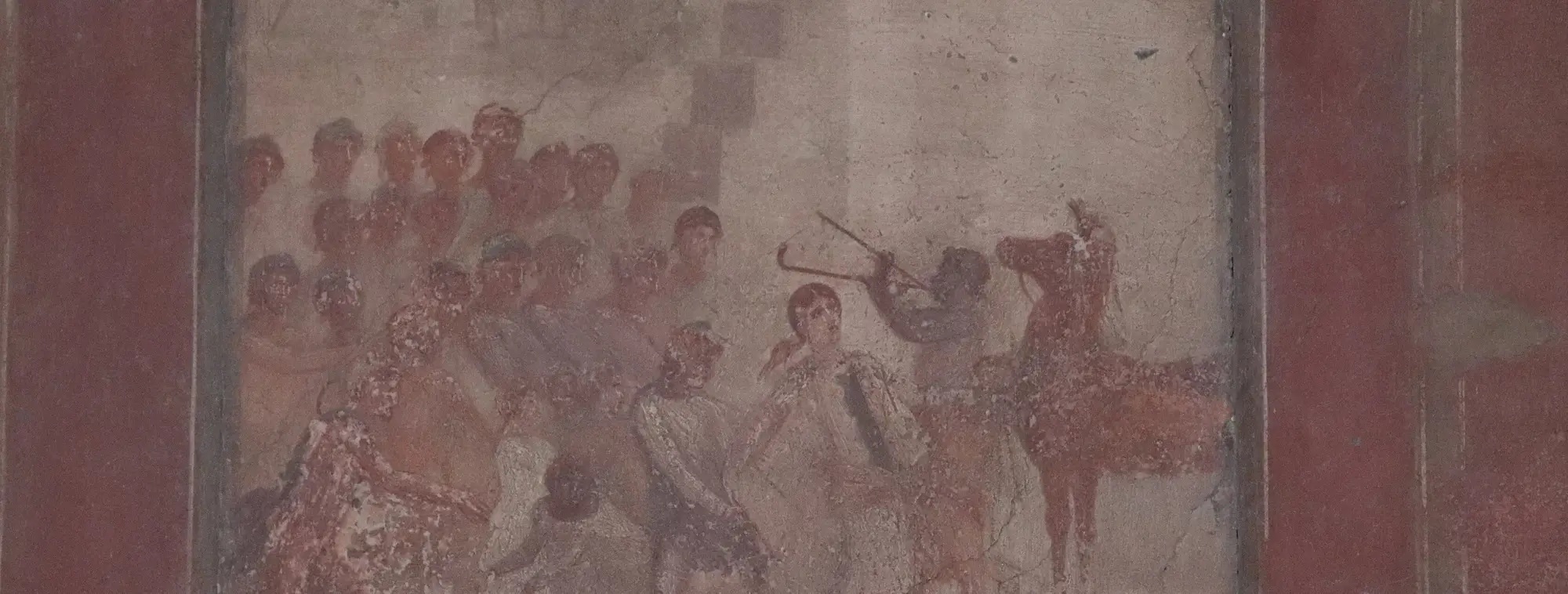
Entities are keyed to MANTO, Wikidata, Pleiades, ToposText and Trismegistos; images come from Wikimedia Commons and are shown only with their licence and credit.
Manuscripts
The witnesses are catalogued from Pinakes with links to the libraries' digital collections; images are embedded where the holder allows it and linked otherwise, folio by folio as the concordance is built.
Citing
Cite a line as lycophron.org/read/#l31. The data and build scripts are versioned; a change log will be published.